Dragon Age artists pushed for Conan-inspired fantasy
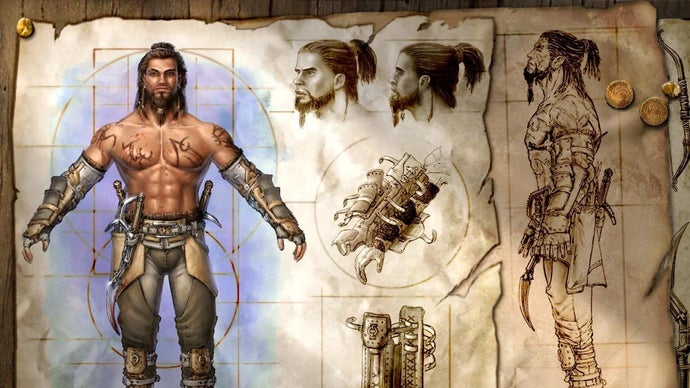
Dragon Age: Origins is BioWare's 2009 fantasy role-playing game, and its visual identity was the product of an open internal faction war rather than a single creative brief. Former Dragon Age lead writer David Gaider — now creative director at Stray Gods developer Summerfall Studios — discloses the split in a podcast-length interview published inside the Summer Eternal anthology: the art department wanted Robert E. Howard's Conan the Barbarian, the design department wanted J.R.R. Tolkien's The Lord of the Rings, and the production team wanted Diablo. The result, per Gaider, is Conan's art style carrying Tolkien's writing style. The account also covers BioWare's parent company Electronic Arts and the "sunk cost" logic that carried Origins to release. For Malaysian and Southeast Asian players, this is archival industry intelligence on a PC RPG whose sequels now sit in apparent limbo following Dragon Age: The Veilguard.
Key Facts
This is an archival development-history disclosure, not a product announcement, so no Malaysian RRP, pre-order window or import SKU exists to report. The verifiable data points below are drawn directly from the Rock Paper Shotgun report on Gaider's Summer Eternal interview, with all unstated figures deliberately left unstated rather than estimated.
| Attribute | Value |
| Subject | Dragon Age: Origins (BioWare, 2009) |
| Primary source of claims | David Gaider, former Dragon Age lead writer; now creative director at Summerfall Studios (Stray Gods) |
| Publication vehicle | Summer Eternal anthology interview, reported by Rock Paper Shotgun |
| Internal factions identified | Art department: Conan the Barbarian. Design department: The Lord of the Rings. Producers: Diablo |
| Resulting creative blend | Conan art style with a Lord of the Rings writing style, per Gaider |
| Original internal pitch | "It's D&D, but it's not" — Dungeons & Dragons with the serial numbers filed off |
| Publisher | Electronic Arts, characterised in the interview as RPG-phobic |
| EA current ownership | Consortium consisting mostly of Saudi Arabia's sovereign investment fund (as stated in source) |
| Series status | Apparent pause after Dragon Age: The Veilguard, per source; modders maintaining community interest |
| Malaysian RRP | Not applicable — no product announcement and no price data in source |
| Physical edition status | Not applicable — no new physical SKU referenced |
| Language support | Not applicable — no localisation data disclosed |
| Region compatibility | Not applicable — no import SKU referenced |
Why Did Dragon Age: Origins' Artists Push for Conan the Barbarian?
The art department drove Origins' early public-facing material and treated Conan as its creative north star, while designers argued for Tolkien. BioWare's original pitch was explicitly "D&D, but it's not" — filing the serial numbers off Dungeons & Dragons — which left the exact flavour of fantasy undefined and invited departmental turf wars over tone and silhouette.
Gaider pinpoints the E3 reveal as the clearest artefact of the schism. The announcement video, produced largely by the Conan-aligned art department and screened behind closed doors, foregrounded scantily clad sorceresses and a bare-chested barbarian. The design department, in Gaider's account, refused to accept that direction as canon and the two sides effectively stopped listening to each other.
"It was mostly made by our art department. They were part of the Conan group. And if you watch it, you'll see sexy sorceresses, the fighter is this bare-chested barbarian riding around… it looks very Conan."
David Gaider, former Dragon Age lead writer, Summer Eternal anthology
"The design department was mostly like, 'no, this is Lord of the Rings, man.'… But Art didn't want to listen to us, so we're like 'If you're going to ignore us, we'll ignore you.'"
David Gaider, former Dragon Age lead writer, Summer Eternal anthology
The initial Dragon Age: Origins concept was positioned internally as "D&D, but it's not", a framing Gaider says failed because fantasy divides into incompatible sub-genres.
How Did Electronic Arts and "Sunk Cost" Thinking Get Origins Released?
Electronic Arts acquired BioWare and, according to Gaider, was markedly RPG-averse as a parent company. Origins nonetheless reached its 2009 release partly because the publisher's investment was already sunk into the project. No patch version, budget figure or sales target is disclosed in the source, so none is asserted here.
Gaider's phrasing indicates that internal scepticism did not translate into cancellation — the economics of an already-funded project did the work. That context matters for how the Dragon Age sequels were subsequently scoped, and it sits alongside the later account from former executive producer Mark Darrah, published in the same anthology, warning about "over-specialised" studios and $100 million projects that require enormous unit sales to break even.
Dragon Age: Origins shipped in 2009 partly on "sunk cost" reasoning inside Electronic Arts, a publisher Gaider characterises as RPG-phobic.
Who Wanted Dragon Age to Be Diablo — and Why Did Blood Become a "Theme"?
Producers pushed a Diablo-style direction, including creatures that explode into blood on impact, and framed blood itself as the game's thematic identity. Both the art and design departments rejected the pitch outright. The producers partially prevailed: Origins shipped with substantial gore before the effect was scaled back because it did not feel right.
The episode is the clearest illustration of the cost of an undefined creative brief. With no single authority setting the target, three departments each filled the vacuum with a different reference point — Howard, Tolkien and Blizzard — and the shipping game absorbed fragments of all three. Gaider's retrospective framing is that the studio learned the necessity of establishing a game's heart before committing to scripts, models and trailers.
"We actually had presentations where the people in charge were like, 'Yeah, Dragon Age, we want that the theme is blood! Dripping with blood!' And I'm like, 'That's not a theme.'… We had to tone it down a bit because that just didn't feel right."
David Gaider, former Dragon Age lead writer, Summer Eternal anthology
Producers pushed for Diablo-style blood explosions as a thematic identity, a direction both BioWare's art and design departments ignored.
Why Did Mass Effect End Up With a Stronger Vision Than Dragon Age?
Mass Effect faced comparable genre ambiguity — conceived as BioWare's Star Wars — but project director Casey Hudson forced a singular vision earlier and put his foot down on what the game was and was not. Gaider credits that intervention for a clear throughline across the trilogy, in contrast to Dragon Age's reactive, sequel-by-sequel course correction.
The consequence is visible in the shipped games. Gaider notes that Origins, Dragon Age II and Dragon Age: Inquisition read as a team figuring out the world by the seat of their pants and reacting with each release, rather than executing a locked creative plan. He also confirms he left BioWare many years before Dragon Age: The Veilguard, whose development the source describes as a further layer of trouble.
"I think, honestly, Mass Effect as a series had a much stronger throughline of vision. This is a game that is very clear on what it is and what it isn't. Whereas Dragon Age started off kind of a jumble and we figured it out as we went."
David Gaider, former Dragon Age lead writer, Summer Eternal anthology
Casey Hudson's early decision-making on Mass Effect gave that series a singular vision Dragon Age lacked across Origins, Dragon Age II and Inquisition.
Southeast Asia & Malaysian Collector Verdict
This report carries no new SKU, no Malaysian RRP and no import window, because the source contains zero pricing, platform or localisation data for any Dragon Age product. Malaysian players should treat it as preservation and industry context rather than a purchase prompt. No official regional restock, reprint or Asian multi-language edition is referenced anywhere in the material.
- Landed cost: Cannot be calculated. No RM, USD or JPY figure appears in the source, and inventing a conversion would misrepresent the report. No landed-cost comparison against regional digital pricing is possible.
- Physical preservation: No physical cartridge, disc or collector's edition is announced. The 2009 PC release is the only version anchored by the source, and it carries no stated Malaysian distribution plan.
- Language support: Undisclosed. The source makes no claim about English voice tracks, subtitles or Asian SKU language options, so none is asserted.
- Hardware compatibility: No verified Steam Deck, ROG Ally, Switch 2 or PS5 Pro compatibility data is present. Treat any such claim circulating elsewhere as unverified against this source.
- Distribution advice: With nothing to import, Play-Asia-style purchasing guidance does not apply here. Malaysian readers tracking Dragon Age availability should wait for a formal publisher SKU announcement before budgeting.
No official Malaysian pricing, physical reprint or localisation SKU is attached to this report, so no landed-cost comparison can be made.
Common Questions
Did Dragon Age: Origins actually ship with a Conan-style art direction?
Partly. Gaider describes Origins as Conan's art style carrying a Lord of the Rings writing style, which was the unresolved output of two departments ignoring each other rather than a deliberate hybrid brief.
Which department won the Dragon Age vision argument?
Neither won outright, and producers pushing a Diablo direction were ignored by both. The series instead corrected course release by release, which Gaider cites as the reason Origins, Dragon Age II and Inquisition feel so different.
Is the Dragon Age series still active after The Veilguard?
Gaider left BioWare years before The Veilguard. The source states that EA, now owned by a consortium consisting mostly of Saudi Arabia's sovereign investment fund, appear to have paused the series afterwards, with modders working to keep community interest alive.
Sources and Methodology
All claims in this dispatch are traceable to a single primary report, with no external figures merged in. Where the source is silent — pricing, platforms, localisation, file sizes, patch numbers — this article is deliberately silent too.
- Primary report: Rock Paper Shotgun, "Sexy sorceresses and bare-chested fighters: Dragon Age's original artists wanted to base it on Conan the Barbarian, much to the outrage of the designers" — rockpapershotgun.com.
- Underlying interview: David Gaider, former Dragon Age lead writer and current creative director at Summerfall Studios, speaking in the Summer Eternal anthology.
- Secondary references in source: Mark Darrah, former Dragon Age executive producer, in the same anthology; IGN's contemporaneous E3 coverage of the Dragon Age announcement.
- Pricing methodology: None applied. The source contains no RRP, MSRP or conversion data for any region, so no RM estimate is offered and no USD or JPY conversion is performed.
- Verification: Claims were checked line-by-line against the source article at the time of publication. Quotations are reproduced as reported, with ellipses marking omissions only.
Network · latest from the sister sites
From the network
Track Malaysian Import Prices Live
Importing Japanese or Asian physical games to Malaysia? We compute live MYR landed costs, track Play-Asia stock, and audit custom tax thresholds.