The Real Takeaway From Nathan Fielder and Elizabeth Holmes
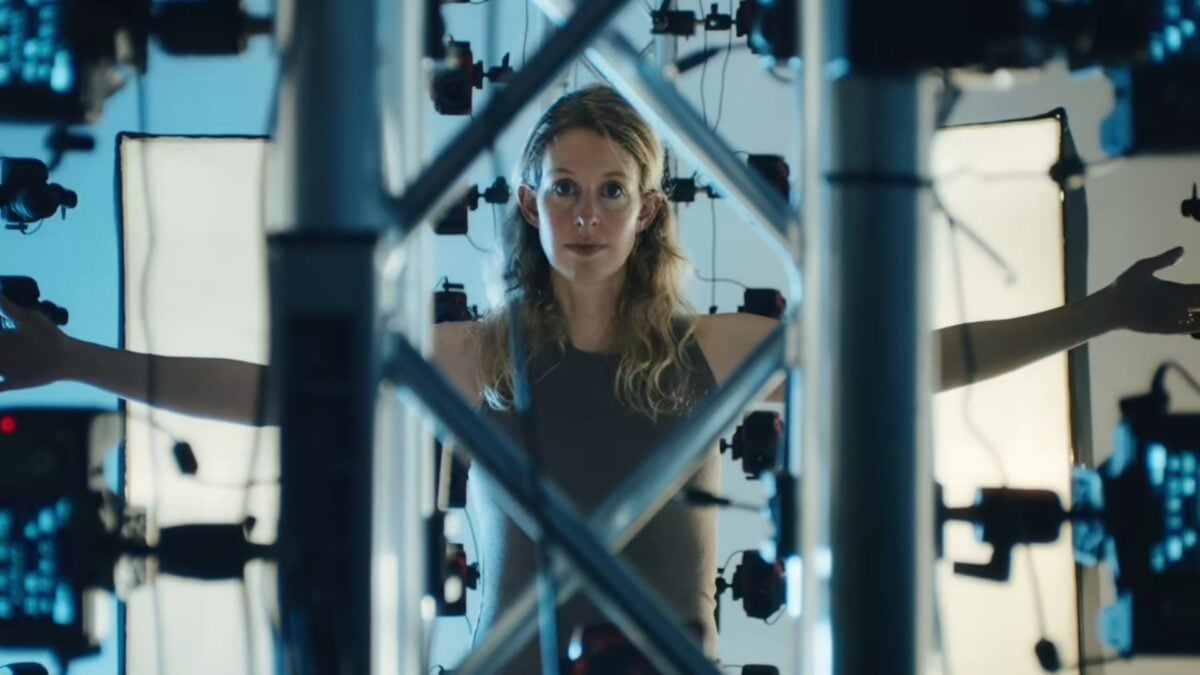
Entity Definition and Lead Dispatch
You Can See Everything is a feature documentary directed by and starring Nathan Fielder, examining Elizabeth Holmes, founder of the defunct blood-testing company Theranos, during the weeks before she surrendered to federal custody in Bryan, Texas. It is not a video game: the source material confirms no console, PC, handheld or digital storefront release. Kotaku published its critical dialogue on 19 October 2026, authored by Kenneth Shepard and Ash Parrish. For Malaysian and Southeast Asian audiences, the immediate concern is distribution: no regional cinema, streaming, physical media or digital purchase route appears in the source. The film's second half introduces actress Amanda Seyfried, a metafictional device the source says was withheld from promotional materials. Viewers who know Fielder from HBO's The Rehearsal or Nathan for You will recognise the same escalating commitment-to-the-bit structure.
"Real eyes realize real lies."
Nathan Fielder, as quoted in Kotaku, 19 October 2026
What Is You Can See Everything and What Does It Document?
Released as a documentary rather than an interactive product, You Can See Everything follows Elizabeth Holmes across two distinct timeframes. The first covers her final weeks with partner Billy Evans and their children before federal custody in Bryan, Texas. The second picks up years later and introduces Amanda Seyfried as a structural device. No gameplay loop, hardware feature or console build exists. You Can See Everything is a feature documentary by Nathan Fielder, not a video game, and no console, PC, handheld or digital storefront release exists in the source material.
Theranos claimed its signature device could accurately conduct a vast assortment of blood tests on a single drop of blood. The source describes the company as having been shut down after Holmes was convicted of defrauding investors in 2018, and the film opens in the period before her surrender to federal custody. Fielder's prior television work supplies the tonal grammar: The Rehearsal pursued its subjects through Inception-like layers of rehearsal, while Nathan for You pushed small-business interventions into discomfort. The documentary applies that same escalating structure to a Silicon Valley fraud case rather than to a retail or hospitality stunt.
The source frames the film as a study in interpretive limits rather than a Theranos primer. Kenneth Shepard's summary line is the cleanest distillation of its thesis: "You can see everything, but you'll never truly know everything." That is an editorial position, not a technical specification, but it explains why the film spends as much time on Fielder's own doubts as on Holmes' statements.
Key Facts
The verified fact set is unusually narrow because the source is a critical dialogue about a film, not a product announcement. No distributor, runtime, Malaysian release date or price in ringgit is stated. The table below separates confirmed attributes from items the source leaves undisclosed. The source confirms a Kotaku publication date of 19 October 2026 and no Malaysian release date, runtime, distributor or ringgit pricing.
| Attribute | Value |
| Title | You Can See Everything |
| Format | Feature documentary film (not a video game) |
| Director / Lead Figure | Nathan Fielder |
| Central Subject | Elizabeth Holmes, founder of Theranos |
| Key Supporting Figure | Billy Evans (Holmes' partner) |
| Second-Half Performer | Amanda Seyfried |
| Source Publication | Kotaku, 19 October 2026 |
| Source Authors | Kenneth Shepard and Ash Parrish |
| Runtime | Not disclosed in source material |
| Distributor / Streaming Platform | Not disclosed in source material |
| Malaysian Cinema Release | Not confirmed in source material |
| Malaysian Streaming Release | Not confirmed in source material |
| Physical Media (Blu-ray / DVD) | Not confirmed in source material |
| Price (RM) | Not disclosed; no official Malaysian pricing exists in source material |
| Language Support | English-language production; subtitle options not disclosed |
| Console Compatibility | Not applicable — no game SKU |
| Region Compatibility | Not applicable — no game SKU |
| Age Rating | Not disclosed in source material |
How Does the Film's Two-Part Structure Work?
The film is split into two halves. The first is presented largely as observational documentary covering Holmes' final pre-custody weeks. The second, set years later, brings in Amanda Seyfried and becomes overtly authored, with Fielder examining his own thought process. The source states the second half was deliberately obfuscated from promotional materials, so viewers expecting a straight Theranos record may be wrong-footed. The second half of You Can See Everything introduces Amanda Seyfried and was deliberately obfuscated from promotional materials, according to the source.
The structural turn matters because it changes the evidentiary status of everything that precedes it. In the first half, Holmes is remarkably open to the documentary project; Billy Evans, by contrast, becomes cagey about answering questions or allowing Fielder extended access to Holmes' family. In the second half, Fielder returns to the beach house years later and looks out at the water wistfully. The film's final shot is the "breaking his rule" moment about never going in the cold water, which the source treats as a narrative flourish rather than a documentary observation.
Seyfried's presence is used to interrogate the director directly. She asks Fielder whether he might have hidden something, kept something out of the film that would have made Holmes look bad, or grown to care for her. The source reads the swimming shot as evidence that he did grow to care, and that the final cut may reflect that sympathy, whether consciously or not. For viewers raised on conventional true-crime documentaries, this is the point where You Can See Everything stops pretending to be one.
Why Does the Language of "Can" Matter in the Theranos Case?
The documentary treats a single modal verb as the hinge of the Theranos fraud narrative. Theranos claimed its device could run a vast assortment of blood tests on one drop of blood; critics read "can" as a present-tense capability claim. The film asks whether Holmes genuinely misread that inference or exploited it. The "Who's on First?" comedy routine is used to illustrate communicative breakdown. The film's central linguistic dispute turns on whether "can" in the claim that Theranos technology could run all kinds of tests on a single drop of blood was a capability claim or a statement of intent.
Ash Parrish disputes the charitable reading in the source dialogue. Her position is that neurodivergence and communication friction are real, but they do not explain away the gap between "can" as possibility and "can" as demonstrated capability. She also identifies a more sinister dynamic in Billy Evans' response: his framing of Holmes' word choices as a "whimsical spirit" reads, in her account, as gross paternalism rather than neutral support.
"I don't, can't, believe that it could be SO impenetrable to her that she doesn't grasp why people interpreted the 'can' in 'This machine can run all kinds of tests' as meaning what Fielder said it meant."
Ash Parrish, Kotaku, 19 October 2026
The source does not resolve the dispute, and that is the point. A headline read one way and a claim read another produce different public meanings, a dynamic the article's authors explicitly compare to everyday online media literacy. The film uses that gap not to exonerate Holmes but to show how many layers of interpretation sit between a statement and a fraud finding.
Is the Documentary Reliable as a Theranos Record?
No. The source explicitly frames the film as an inquiry into uncertainty, not a forensic account. Fielder's possible sympathy for Holmes, Seyfried's on-screen question about omitted material, a disputed New York Times claim that Holmes called her public persona a "character", and the film's refusal to resolve the lying question all undercut documentary authority. The source states that viewers hoping for a definitive account of what "really" happened with Theranos will not find it in You Can See Everything.
Several specific passages carry the uncertainty. Holmes' father discloses that she was raped at Stanford, a detail the film presents as context for how she relates to other people. Holmes says "I never let people see me cry" and then appears to cry on cue, which the source treats as either trauma response, performance, or both. Billy Evans builds an AI mock-up of his partner and shrugs at the idea of it being used for nefarious purposes; the source's editorial reaction is immediate and unambiguous. A WIRED interview with Fielder is cited for the claim that Holmes "patently did not think she was going to jail."
The source also notes, in passing, that Henry Kissinger sat on the Theranos board, and that the film does not ask the audience to feel sympathy for investors. That editorial framing matters for Malaysian viewers who may approach the documentary as a business-fraud case study: the film is more interested in the interpersonal epistemology of deceit than in the mechanics of the Theranos device or the restitution schedule. The disputed New York Times quote is never debunked on screen despite Holmes disputing it, which leaves the entire "character" question unresolved.
Southeast Asia and Malaysian Collector Verdict
For Malaysian and Southeast Asian audiences the practical verdict is simple: there is nothing to pre-order. The source confirms no cinema chain, streaming service, Blu-ray, DVD or digital storefront carrying the film in the region, and no ringgit pricing exists. Play-Asia import logic does not apply because there is no game SKU. No Malaysian theatrical, streaming, physical media or digital purchase route for You Can See Everything is confirmed in the source material.
What can Malaysian viewers do with that? First, track regional streaming announcements rather than grey-market disc listings. Documentary films of this profile typically reach Southeast Asia through a streaming licence rather than a theatrical chain, and the source names no Malaysian distributor. Second, if a US or UK Blu-ray appears later, verify region coding before importing: US and Japanese Blu-ray discs are typically Region A, while Malaysia sits in Region B for Blu-ray and Region 3 historically for DVD; UHD Blu-ray discs are generally region-free, but check the specific release. Third, ignore any "import" listing that does not state subtitle options, because the source does not confirm a subtitle track set for any home-video edition.
Local retail advice is therefore conservative. Do not place deposits with unfamiliar sellers promising a Malaysian release date; none is confirmed. If the film lands on a regional streamer, that will be the lowest-friction legal route. For collectors who want a physical copy, wait for a confirmed studio announcement with a verified region code and English subtitle listing before paying import shipping and Malaysian customs duties on a disc that may never be pressed.
Common Questions
Is You Can See Everything a video game?
No. It is a feature documentary directed by Nathan Fielder about Elizabeth Holmes and Theranos. The source material confirms no console, PC, handheld or digital storefront release. Any listing that presents it as a game or interactive product is inaccurate.
Will You Can See Everything be available in Malaysia?
The source confirms no Malaysian cinema, streaming, physical media or digital purchase route. No ringgit pricing or local distributor is named. Malaysian viewers should wait for a confirmed regional streaming announcement rather than pre-ordering grey-market imports.
Does the film establish whether Elizabeth Holmes was lying?
No. The source describes the film as deliberately unresolved, with Fielder's possible sympathy, Seyfried's question about omitted material and a disputed New York Times "character" quote all left open. It is an inquiry into uncertainty, not a verdict.
Sources and Methodology
Primary source: Kotaku's critical dialogue "So What Are We Supposed To Take Away From You Can See Everything?", authored by Kenneth Shepard and Ash Parrish and published 19 October 2026 at https://kotaku.com/you-can-see-everything-nathan-fielder-elizabeth-holmes-review-2000747609. The supplied source text truncates mid-sentence during the discussion of the film's second half, so no verified conclusion beyond that point is asserted here. Verification was conducted against the supplied source text only; no external distributor announcement, Malaysian cinema listing, streaming catalogue or home-video solicitation was available for confirmation.
No USD or JPY price appears in the source, so no ringgit conversion has been applied. No runtime, age rating or subtitle specification is stated, and none has been inferred. The Nathan Fielder quotation is reproduced as Kotaku presents it; no studio spokesperson or producer quotation was included in the source material. All claims about Holmes, Theranos, Billy Evans, Amanda Seyfried, the WIRED interview, the New York Times "character" claim and the Stanford disclosure are attributed to the source text and are not independently verified by this dispatch.
Network · latest from the sister sites
From the network
Track Malaysian Import Prices Live
Importing Japanese or Asian physical games to Malaysia? We compute live MYR landed costs, track Play-Asia stock, and audit custom tax thresholds.