Needle In A Haystack Clone Devs Call Out Vibe Coder
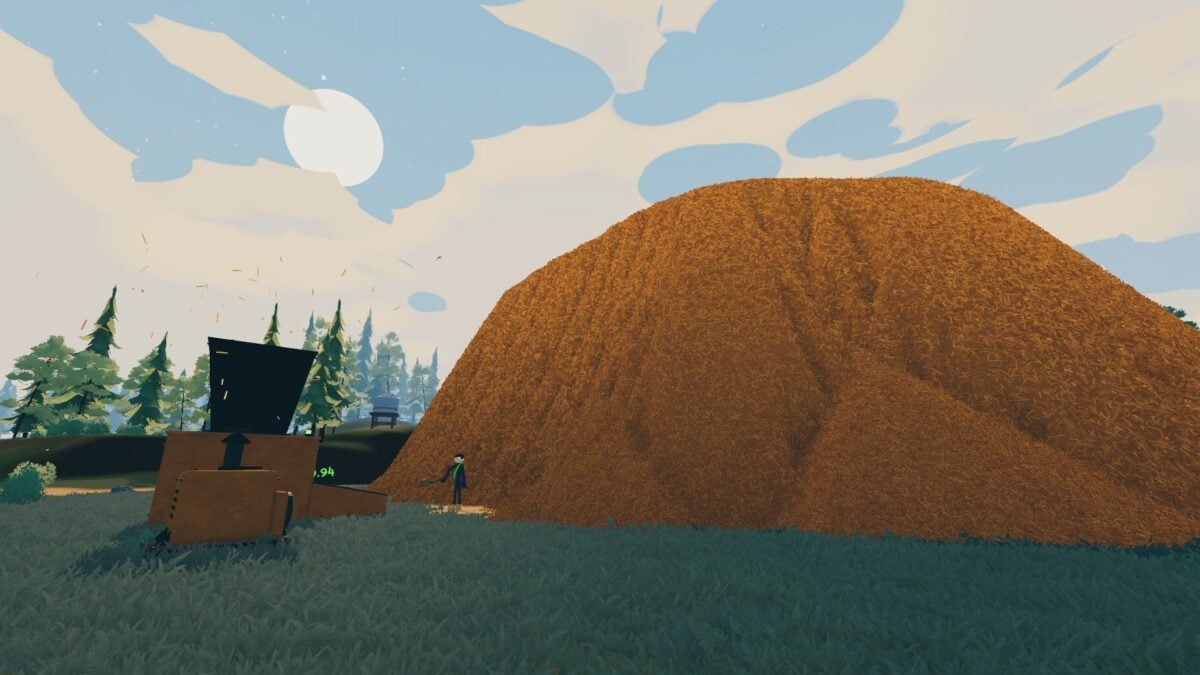
Indie game developer NoGlyph has formally accused rival developer Little Field Studios of byte-for-byte code theft on Steam, alleging that generative AI was used to decompile their incremental sorting simulation. The controversy centres on Needle In A Haystack, released on 29 September 2026, which was itself developed as an unlicensed clone of Studio Bitdot's viral August 2026 hit Needle In A Haystack Simulator. On 17 October 2026, NoGlyph published file comparisons demonstrating identical code structures inside Little Field Studios' newly published release, A Game About Needle In A Haystack. For PC and portable console players across Malaysia and Southeast Asia utilising Steam Deck and ROG Ally hardware, the dispute highlights mounting technical and copyright vulnerabilities across open-ecosystem digital storefronts, where rapid generative AI decompilation threatens software integrity and digital preservation.
Key Facts
| Attribute | Value |
| Disputed Software | A Game About Needle In A Haystack (accused) vs. Needle In A Haystack (claimant) |
| Original Base Title | Needle In A Haystack Simulator (Studio Bitdot, August 2026) |
| Developers Involved | Little Field Studios (accused), NoGlyph (claimant), Studio Bitdot (original) |
| Release Dates | 29 September 2026 (NoGlyph); 16 October 2026 (Little Field Studios) |
| Target Platform | PC (Steam), compatible with Steam Deck and Windows handhelds |
| Format & Regional Access | Digital download via Steam Store (Malaysia regional pricing supported) |
| Standard Pricing | Micro-indie digital tier, typically $0.99 to $2.99 (~RM4.50 to ~RM13.50) |
| Code Infringement Metrics | 13 identical classes, 39 byte-for-byte identical methods |
| Language Support | English interface support across all listed Steam SKUs |
Steam catalog tracking registered at least 14 distinct clones of Studio Bitdot's sorting simulation operating on the platform by October 2026.
How Did Claude-Assisted Vibe Coding Duplicate Proprietary Game Code?
The code duplication occurred when Little Field Studios deployed automated large language model prompts, reportedly via Anthropic's Claude, to decompile and reconstruct compiled binary files from NoGlyph's closed-source release. This algorithmic process preserved verbatim internal function calls, variable naming schemes, and non-functional residual error strings that pointed directly to obsolete project components.
According to documentation released on Steam and Discord by NoGlyph lead developer Jahvin, the decompilation left unambiguous digital fingerprints across the codebase. Little Field Studios' build incorporated identical software architecture that served no active functional purpose in their own title.
“When we looked through [A Game About Needle In A Haystack’s] files, we found 13 of our classes inside it with the exact same names. More than half of the functions in that part match ours exactly. Some of our own error messages are still in there word for word, including one that points to a shader from our project that doesn’t exist in their game.”
NoGlyph Developer Statement, Steam Community Hub (17 October 2026)
Jahvin further specified that 39 individual methods within the binary remained entirely identical down to the byte level. This technique mirrors recent workflow exploits in the indie space, including an incident documented by GameSpark where a developer reconstructed upcoming indie title Escape the Walls inside Roblox within 24 hours based entirely on a social media preview clip.
Technical analysis confirmed that 39 individual methods in Little Field Studios' build matched NoGlyph's compiled source code byte for byte.
Why Are Indie Studios Withdrawing Demos Across Global Digital Storefronts?
Independent developers are systematically cancelling public game demonstrations to prevent automated generative scrapers from capturing visual logic and decompiling game loops ahead of retail launch. Without substantial legal reserves to enforce intellectual property rights, studios face catastrophic pipeline risks from rapid generative clones saturating digital marketplaces like Steam.
Publisher Alliance Arts demonstrated this defensive shift by officially cancelling the planned public Steam demo for their anime gambling horror title, Drunken Goddess Reflux. The production team pivoted strictly to closed beta testing after determining that public executable builds could be ingested and replicated by AI workflows within days of deployment.
With Valve projected to log over 24,000 new releases on Steam across 2026, uncurated storefronts present severe discoverability and security liabilities for legitimate micro-studios. Developers are increasingly withholding early access phases, slice builds, and even promotional gameplay footage to insulate their assets from instantaneous cloning.
Alliance Arts officially cancelled the public Steam demo of Drunken Goddess Reflux specifically to prevent generative tools from duplicating the game's mechanics prior to launch.
Southeast Asia & Malaysian Collector Verdict
Southeast Asian PC and handheld gamers must treat hyper-derivative clone releases on Steam as volatile digital assets lacking long-term software support or platform permanence. These ultra-budget digital titles, typically priced between $0.99 and $2.99 (~RM4.50 to ~RM13.50 on regional Steam pricing), face high delisting risks whenever DMCA claims or store terms violations are filed.
Unlike standard physical console imports from Japanese or Asian distributors via platforms like Play-Asia, these titles exist exclusively as unverified digital executables. While verified safe binaries run smoothly on handheld platforms such as the Steam Deck and Asus ROG Ally, cloned software often ships with unoptimised runtime bloat and broken asset calls. Gamers seeking authentic incremental gameplay should purchase Studio Bitdot's original Needle In A Haystack Simulator to ensure developer compensation and secure legitimate software updates.
Unverified clone titles on digital storefronts carry zero physical preservation value and risk abrupt store delisting due to intellectual property disputes.
Common Questions
What is vibe coding in game development?
Vibe coding refers to constructing or reverse-engineering software by directing generative artificial intelligence models using conversational prompts. The operator provides high-level instructions while the machine generates, refactors, or decompiles code without requiring manual line-by-line programming by the prompter.
Can developers protect their Steam releases from AI decompilation?
Developers protect builds by applying advanced binary obfuscation, withholding uncompiled asset shaders, enforcing server-side logic validation, and eliminating public pre-release demos. However, complete protection remains technically challenging once compiled client binaries are publicly distributed across digital open platforms.
Are digital micro-clones available on console platforms like Nintendo Switch or PS5?
Micro-clones rarely pass the strict technical compliance, certification costs, and publisher verification workflows enforced by Nintendo and PlayStation. Consequently, these unlicensed AI-cloned iterations remain almost exclusively confined to open storefronts like Steam and user-generated content platforms like Roblox.
Sources and Methodology
This technical dispatch synthesises verifiable developer statements published on 17 October 2026 by NoGlyph lead programmer Jahvin, storefront release records across the Steam platform, and regional market analysis from ROCKSTARmedia. Cross-industry context incorporates reporting from GameSpark and official production updates issued by Alliance Arts regarding Drunken Goddess Reflux. All currency conversions reflect approximate Malaysian Ringgit market equivalents for standard micro-indie software tiers as of October 2026.
Network · latest from the sister sites
From the network
Track Malaysian Import Prices Live
Importing Japanese or Asian physical games to Malaysia? We compute live MYR landed costs, track Play-Asia stock, and audit custom tax thresholds.