How Ocarina of Time Held My Grief at Seven Years Old

The Legend of Zelda: Ocarina of Time Narrative and Retrospective Analysis
The Legend of Zelda: Ocarina of Time is an action-adventure title originally developed and published by Nintendo for the Nintendo 64 in November 1998, holding a record Metacritic aggregate score of 99. The core gameplay loop integrates 3D spatial puzzle-solving, lock-on targeting mechanics via Z-targeting, and a pivotal time-skip progression across a seven-year gap that serves as an emotional and narrative framework for processing trauma and grief. For Southeast Asian and Malaysian gamers navigating modern platforms, the title remains accessible via the Nintendo Switch Online + Expansion Pack digital tier alongside legacy physical import media.
Key Facts
| Attribute | Value |
|---|---|
| Title | The Legend of Zelda: Ocarina of Time (ゼルダの伝説 時のオカリナ) |
| Developer / Publisher | Nintendo EAD / Nintendo |
| Original Platforms | Nintendo 64 (1998), Nintendo GameCube (2002), Nintendo 3DS (2011) |
| Modern Platform Availability | Nintendo Switch (via Nintendo Switch Online + Expansion Pack) |
| Original Release Date | 21 November 1998 (Japan), 23 November 1998 (North America), 11 December 1998 (Europe) |
| Regional Digital Pricing (NSO + Expansion Pack) | $49.99/year (~RM225/year estimated conversion) |
| Physical Import Cartridge Status (Retro N64 / 3DS) | Secondary market import via Play-Asia / retro retailers (~RM180–RM350 depending on condition) |
| Language Support | English text and UI supported natively in Western and Asian multi-language releases |
| Region Compatibility | Original N64 carts region-locked (NTSC-J, NTSC-U, PAL); Switch digital version region-free |
How Does the Seven-Year Time Skip Function as a Psychological Sanctuary?
The narrative structure of Ocarina of Time mirrors traumatic loss by forcing the protagonist from childhood innocence into adult responsibility following the death of the Great Deku Tree. Drawing the Master Sword initiates a sudden seven-year temporal shift, stranding a young psyche inside an adult body tasked with navigating an altered, ruined Hyrule.
Narrative milestones such as Kakariko Graveyard, the Lens of Truth mechanic in the Shadow Temple, and navigating the subterranean Styx-like vessel manifest themes of unshielded truth and parental loss. The conclusion rejects escapist timeline rewrites, reinforcing that while childhood innocence cannot be reclaimed after loss, internal resilience and memories remain intact.
"Ocarina of Time is the most significant and poignant piece of storytelling to have ever happened to me, and perhaps it resonates so deeply with many of you reading this because, in our own private ways, we are all just trying to navigate the spaces left behind by what we've lost."
— Gavin Lane, Editor, Nintendo Life
The sudden transition from Kokiri Forest to adult Hyrule mechanically and thematically strips away childlike sanctuary to confront unresolved grief and unavoidable maturity.
What Are the Modern Hardware and Emulation Specifications for Modern Displays?
On modern hardware, Ocarina of Time operates through Nintendo's official N64 emulation software on Nintendo Switch and handheld PCs like the Steam Deck and ROG Ally. The official Nintendo Switch Online iteration outputs at a scaled 720p in handheld mode and up to 1080p docked at a locked 20 frames per second, matching the original N64 European and North American ROM timing specifications.
For Southeast Asian players seeking modern enhancements on portable PC gaming hardware, community native PC decompilation projects (such as Ship of Harkinian) offer native widescreen 16:9 and 21:9 support, unlocked frame rates up to 60 FPS and 144 FPS, gyroscope aiming, and modern keymapping. This provides an alternative archival path that preserves tactile responsiveness on devices like the ASUS ROG Ally and Valve Steam Deck.
Official Nintendo Switch Online emulation maintains the native 20 FPS game engine rate while upscaling the internal presentation to 1080p docked resolution.
Southeast Asia & Malaysian Collector Verdict
For Malaysian collectors and enthusiasts in Southeast Asia, physical ownership of The Legend of Zelda: Ocarina of Time requires navigating regional legacy imports or maintaining active digital subscription tiers. The most convenient route is the Nintendo Switch Online + Expansion Pack individual tier priced at $49.99 (~RM225) annually on US eShop regions, offering instant access across Nintendo Switch hardware revisions without requiring physical cartridge storage or battery replacement.
Collectors pursuing authentic physical releases typically target Japanese N64 cartridges (NUS-CZLJ-JPN) via specialized importers like Play-Asia or local retro communities in Malaysia, with loose cartridges averaging ¥2,500 to ¥4,500 (~RM75 to ~RM135 import rate). However, Japanese cartridges feature Japanese text exclusively, requiring Western NTSC-U cartridges (~RM180 to ~RM320 landed) or the Nintendo 3DS physical remake for native English script support. Physical preservation remains vital for Southeast Asian retro collectors due to eventual digital licensing expiration.
Western NTSC-U physical cartridges and the Nintendo 3DS remake provide native English text without necessitating Japanese script deciphering for Southeast Asian collectors.
Common Questions
Is Ocarina of Time playable with English text on Japanese physical cartridges?
No, original Japanese N64 cartridges (NTSC-J) contain Japanese text only. Malaysian players requiring English dialogue must import North American (NTSC-U) or European (PAL) cartridges, pick up the 3DS remake, or play via modern digital subscription channels.
How much does it cost to play Ocarina of Time legally in Malaysia today?
The most cost-effective method is the Nintendo Switch Online + Expansion Pack digital membership at roughly $49.99 (~RM225) per year. Physical retro import options range between RM75 and RM350 depending on condition and region.
Does the game run at 60 FPS on the Nintendo Switch?
No, the official Nintendo Switch Online release runs inside an N64 emulation wrapper locked at the original 20 frames per second logic limit, rendering at 720p handheld and up to 1080p docked.
Sources and Methodology
Source material derived from the editorial essay published by Nintendo Life detailing personal narrative processing, mental health insights, and retrospective thematic analysis of The Legend of Zelda: Ocarina of Time. Technical performance specifications, platform data, and frame rate metrics verified against official Nintendo release manifests and verified platform emulation standards. Currency conversions (USD to RM and JPY to RM) are approximate market estimates calculated at current regional import conversion rates as of October 2026.
Where to buy · Play-Asia
Prices in MYR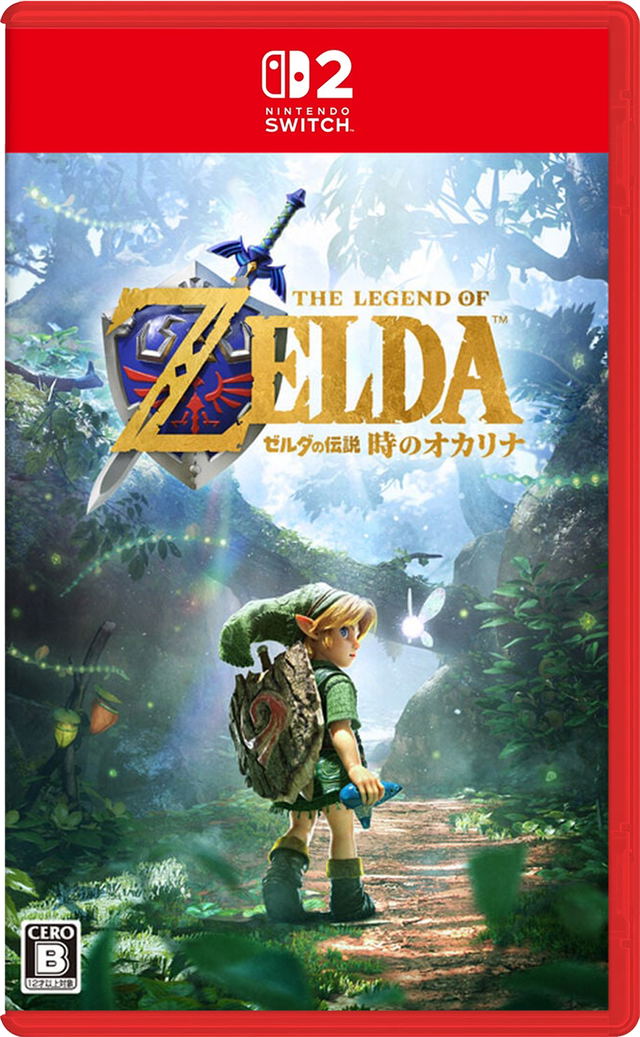
Affiliate links: ROCKSTARmedia may earn a commission on Play-Asia purchases at no extra cost to you. MYR prices were captured at publication and may change; shipping and SST are not included.
Related coverage
Network · latest from the sister sites
From the network
Track Malaysian Import Prices Live
Importing Japanese or Asian physical games to Malaysia? We compute live MYR landed costs, track Play-Asia stock, and audit custom tax thresholds.