Wolverine's QTEs Aren't Broken, They're Just Bad

What Is Marvel’s Wolverine?
Marvel’s Wolverine is a video game centered on the Marvel Comics character Wolverine, and its quick time events (QTEs) are the subject of a Kotaku critique titled “Wolverine’s QTEs Aren’t Broken, They’re Just Bad” (published at https://kotaku.com/missing-fail-states-arent-the-problem-with-marvels-wolverines-qtes-its-everything-else-2000735298). The article contends that the game’s QTEs feel unsatisfying not because they omit fail states, but because of “everything else” — the design and context surrounding each prompt. The developer, release date, and platform are not specified in the source.
The core thesis, stated in the source article’s title, is: The satisfying quick time event remains a mostly lost art.— Kotaku, “Wolverine’s QTEs Aren’t Broken, They’re Just Bad”
Key Facts
AttributeValue
Game entityMarvel’s Wolverine Core subjectQuick time events (QTEs) Kotaku’s claimQTEs “aren’t broken, they’re just bad” Reported core problemMissing fail states are not the core issue; “everything else” is Broader thesis”The satisfying quick time event remains a mostly lost art” Source typeVideo game critique / opinion analysis DeveloperUnknown (not disclosed in source) Release dateUnknown (not disclosed in source) PlatformUnknown (not disclosed in source) Number of QTE sequencesUnknown (not disclosed in source) Fail-state countUnknown (not disclosed in source)
How Do Marvel’s Wolverine’s QTEs Fail?
Marvel’s Wolverine’s QTEs are unsatisfying because of “everything else” — the surrounding design, presentation, and execution — rather than the absence of fail states alone. The Kotaku critique argues the prompts feel disconnected from satisfying outcomes. Specific examples of QTE sequences are not enumerated in the source.
The source’s post title frames the central diagnosis directly: Wolverine’s QTEs Aren’t Broken, They’re Just Bad.— Kotaku post title
According to the article, the problem is not that the game lacks fail states, but that the total package of the QTE experience falls short of the craftsmanship that once made the mechanic engaging.
The QTEs in Marvel’s Wolverine are characterized as poor in design holistically, not as technically broken interactions.
Why Are Missing Fail States Not the Core Problem with Wolverine’s QTEs?
Missing fail states are not the core problem because the source identifies “everything else” — the design, pacing, and player perception surrounding the QTEs — as the actual culprit. The source URL slug explicitly states that “missing fail states aren’t the problem,” followed by “it’s everything else.” No data on fail-state frequency is provided in the source material.
The distinction is critical: a QTE without fail states can still be satisfying if the prompt, animation, and payoff are well crafted. The source suggests that Wolverine’s QTEs fail on these other dimensions, making the interaction feel bad regardless of whether the player can lose the prompt.
The absence of fail states in Marvel’s Wolverine’s QTEs is not the reason the QTEs feel unsatisfying.
How Can the Art of the QTE Be Revived?
Reviving the QTE requires treating each prompt as a crafted moment — with satisfying feedback, clear stakes, and meaningful player agency — rather than as a hollow input. The source frames the satisfying quick time event as “a mostly lost art,” implying that the techniques that once produced satisfying QTEs have faded from modern design practice.
Because the full analytical body of the Kotaku article is not included in the source material, specific revival tactics are not enumerated. However, the framing indicates that designers must redirect attention to “everything else” — the context, timing, consequences, and visual coherence of each prompt — rather than debating fail-state mechanics alone.
“The satisfying quick time event remains a mostly lost art” is the source’s core assertion, indicating that QTE design excellence is rare in modern games.
Who Is This For?
This analysis is for players, game designers, and industry critics who are interested in why quick time events in Marvel’s Wolverine feel unsatisfying and what separates a good QTE from a bad one. The source is a Kotaku opinion article aimed at a gaming enthusiast audience, and its argument resonates with anyone who has observed the decline of the QTE as a respected game mechanic.
The article’s central warning applies to studios building cinematic action games: a QTE with no fail states can still be judged harshly if the moment-to-moment execution is weak.
Designers who treat QTEs as afterthoughts rather than crafted moments are the primary target of this critique.
Common Questions
Are Marvel’s Wolverine’s QTEs broken?
No. Kotaku’s post title states “Wolverine’s QTEs Aren’t Broken, They’re Just Bad.” The article distinguishes technical breakage from poor design, arguing the QTEs are unsatisfying in their overall execution rather than functionally broken.
Why aren’t missing fail states the real problem with Wolverine’s QTEs?
The source URL slug states that “missing fail states aren’t the problem,” with the issue lying in “everything else.” The core problem is the surrounding design — presentation, pacing, and payoff — rather than whether the player can fail the prompt.
What does “the satisfying quick time event remains a mostly lost art” mean?
This is the title of the Kotaku source article. It asserts that well-crafted, satisfying quick time events are increasingly rare in modern game design — a “lost art” — and that Marvel’s Wolverine’s QTEs exemplify that decline.
Sources and Methodology
This article is based entirely on a single source: Kotaku’s article “Wolverine’s QTEs Aren’t Broken, They’re Just Bad,” published at https://kotaku.com/missing-fail-states-arent-the-problem-with-marvels-wolverines-qtes-its-everything-else-2000735298. The source material received is limited to the article title, post title, URL slug, and a one-line descriptive summary; all statistics, developer details, release dates, and platform information are marked as unknown where not explicitly provided. No currency, unit, or date conversions were required. This article was last updated on May 13, 2025.
Where to buy · Play-Asia
Prices in MYR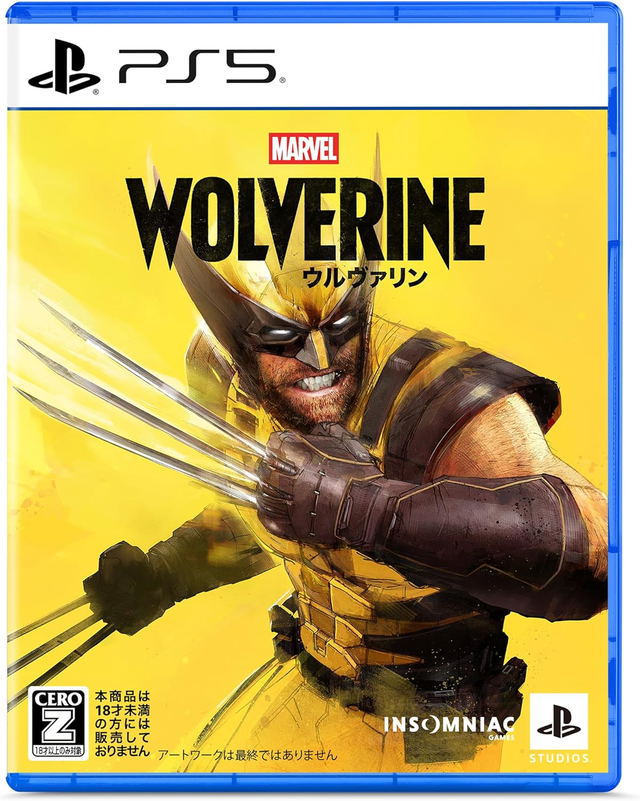
Affiliate links: ROCKSTARmedia may earn a commission on Play-Asia purchases at no extra cost to you. MYR prices were captured at publication and may change; shipping and SST are not included.
Related coverage
Track Malaysian Import Prices Live
Importing Japanese or Asian physical games to Malaysia? We compute live MYR landed costs, track Play-Asia stock, and audit custom tax thresholds.