Rolling Remains the Fastest Way to Travel in Ocarina of Time

The Legend of Zelda: Ocarina of Time remake for Nintendo Switch 2 is Nintendo's full-scale reimagining of its 1998 action-adventure masterpiece, directed and overseen by franchise producer Eiji Aonuma. Released globally in November 2026, the title introduces a dedicated sprint mechanic intended to curb the legacy technique of repetitive dodge-rolling across Hyrule Field. Despite Nintendo designing the hold-to-dash mechanic to streamline overland traversal, frame-timed speedrun analysis confirms that continuous dodge-rolling remains numerically faster than the new dash, while front-hopping into an immediate roll yields the highest overland velocity. For Malaysian and Southeast Asian players picking up the Switch 2 release via regional retail or Japanese import cartridges, understanding these frame timings is vital for speedrunning and route optimisation. Within four days of launch, the remake secured 70 percent of the Nintendo 64 original's lifetime sales, cementing its status as an immediate commercial blockbuster across Asian and global markets.
Key Facts
The technical specifications and retail availability for The Legend of Zelda: Ocarina of Time remake on Nintendo Switch 2 confirm unified multi-language cartridge manufacturing across Asian territories, physical cartridge preservation, and full backward compatibility with regional Nintendo Account profiles across Southeast Asia.
| Attribute | Value |
| Platform | Nintendo Switch 2 |
| Developer & Publisher | Nintendo |
| Release Window | November 2026 |
| Estimated Retail Price | $69.99 (~RM315) / ¥8,800 (~RM265) (estimated import conversion) |
| Physical Media Status | Nintendo Switch 2 Game Card (Play-Asia / Regional Retail) |
| Language Support | English voice and subtitles on Japanese/Asian SKUs |
| Hardware Compatibility | Nintendo Switch 2 Handheld / Docked / Pro Controller |
| Early Sales Velocity | 70 percent of original N64 lifetime sales reached in 4 days |
The physical release of The Legend of Zelda: Ocarina of Time on Nintendo Switch 2 retails for an estimated $69.99 (~RM315) with unified English language support on Japanese and Asian cartridges.
Why Does Dodge-Rolling Outpace Link's New Sprint Mechanic?
Continuous dodge-rolling outpaces Link's newly implemented sprint mechanic in The Legend of Zelda: Ocarina of Time remake due to legacy animation velocity data taking priority over the sprint acceleration curve. While Nintendo introduced the hold-to-dash function to replace roll spamming, precise timing tests show that sustained rolling maintains higher constant forward velocity across Hyrule Field.
During the official gameplay reveal in September 2026, series producer Eiji Aonuma explained that Link's new sprint was added specifically after observing players continuously executing dodge-rolls to travel faster in the 1998 original. In that release, Link possessed only a single base running speed prior to acquiring Epona, prompting speedrunners and casual players alike to chain dodge-rolls indefinitely.
"In the original game, I believe some players rolled to get around faster. Now, if you hold down the A button, you roll, then dash like this. Dashing is recommended whenever you’re traveling longer distances."
Eiji Aonuma, Series Producer, Nintendo
Despite Aonuma's explicit design intention, speedrunner route timing published following the remake's launch reveals that the rolling mechanic retains superior momentum over time. While the gap between standard running and sprinting has closed significantly for casual traversal, advanced movement testing revealed an even more efficient exploit: chaining a forward hop into an immediate dodge-roll produces greater speed than standard roll loops or continuous dashing.
Speedrunner frame tests confirm that performing a front hop followed immediately by a dodge-roll yields the highest overland velocity in the Ocarina of Time remake.
How Do Remake Sales and Mechanical Overhauls Impact Switch 2 Players?
The Ocarina of Time remake achieved 70 percent of the original Nintendo 64 title's lifetime sales within four days of launch, driven by comprehensive mechanical modernisations. Alongside the sprint system, the remake updates critical dungeons like the Water Temple, which producer Eiji Aonuma described as overdue homework for the development team.
Commercial tracking reported by Kotaku on 11 November 2026 indicates that the Switch 2 release is on course to surpass the total lifetime sales of the 1998 original within its opening week. The commercial surge reflects widespread player reception of quality-of-life adjustments, including streamlined item management and altered progression sequences.
The mechanical adjustments also place a spotlight on input precision. Analysis of peripheral performance confirms that executing complex movement chains and timing-sensitive button combinations benefits substantially from the Nintendo Switch 2 Pro Controller. Input-heavy sequences, such as obtaining the Biggoron Sword or navigating revised second-act encounters, reward dedicated tactile response over standard portable Joy-Con layouts.
Nintendo's remake reached 70 percent of the Nintendo 64 original's lifetime sales in four days, tracking to surpass total lifetime sales within its first week.
Southeast Asia & Malaysian Collector Verdict
Malaysian and Southeast Asian gamers should prioritise official Asian or Japanese physical editions of the Ocarina of Time remake, which carry complete English voice and text options on-cartridge. At an estimated landed import price of RM265 to RM315, physical distribution through Play-Asia or local specialist retailers provides superior long-term ownership.
Digital purchases via regional Nintendo eShop storefronts remain pegged to standard foreign exchange rates, where a $69.99 digital tag translates to approximately RM315 before platform payment surcharges. In contrast, Japanese physical cartridges listed at ¥8,800 (~RM265) represent an economical import alternative when ordered through international platforms such as Play-Asia, especially given favourable yen conversion rates.
Crucially for physical media preservation, Japanese and multi-language Asian retail cartridges include full English audio and subtitle tracks directly on the game card. Players are not subjected to mandatory day-one regional asset downloads to access English text, ensuring full hardware plug-and-play compatibility across Malaysian Nintendo Switch 2 consoles.
Importing physical Japanese or Asian multi-language cartridges via Play-Asia guarantees uncompromised English language support on Nintendo Switch 2 hardware without regional eShop lockouts.
Common Questions
The common questions surrounding The Legend of Zelda: Ocarina of Time remake address traversal efficiency, physical cartridge language compatibility, and regional import pricing for Southeast Asian gamers. These concise answers provide immediate clarity regarding Nintendo Switch 2 mechanics and import viability across regional markets.
Is rolling definitively faster than sprinting in the Ocarina of Time remake?
Yes. Frame-timed speedrunner testing verifies that spamming Link's dodge-roll produces faster travel across long distances than the new hold-to-dash mechanic. Players seeking maximum overland velocity can achieve even higher speeds by chaining a forward hop directly into a dodge-roll.
Does the Japanese physical edition on Switch 2 support English subtitles and audio?
Yes. Japanese and Asian retail cartridges include full English language voice acting, menus, and subtitles directly on the game card. Malaysian gamers importing Japanese physical copies through importers such as Play-Asia can play immediately without secondary regional downloads or language patches.
What is the expected retail and import price for Malaysian gamers?
The game retails digitally at an estimated $69.99 (~RM315), with physical Japanese import cartridges averaging ¥8,800 (~RM265) before shipping. Local Malaysian game retailers typically list official Southeast Asian distribution copies between RM289 and RM319 depending on currency exchange variations.
Malaysian gamers importing physical editions of the Ocarina of Time remake obtain native English language support and full Nintendo Switch 2 Pro Controller compatibility.
Sources and Methodology
This technical dispatch synthesises primary gameplay demonstrations by series producer Eiji Aonuma, speedrun community frame data, and industry reporting published by Kotaku on 11 November 2026. Import currency calculations reflect November 2026 foreign exchange benchmarks across Bank Negara Malaysia, Japanese yen retail indices, and regional Play-Asia distribution metrics.
- Primary Source: Kotaku technical report by Rebekah Valentine, published 11 November 2026.
- Commercial Data: Kotaku retail analysis by John Walker, citing official launch sales figures reaching 70 percent of N64 lifetime volume in four days.
- Production Background: Developer presentation statements by Eiji Aonuma detailing movement mechanics and Water Temple structural revisions.
- Pricing Methodology: Japanese yen retail pricing of ¥8,800 converted at approximately RM265; North American digital pricing of $69.99 converted at approximately RM315.
All technical movement comparisons and sales velocity metrics derive from verified developer statements and launch-week tracking data documented on 11 November 2026.
Where to buy · Play-Asia
Prices in MYR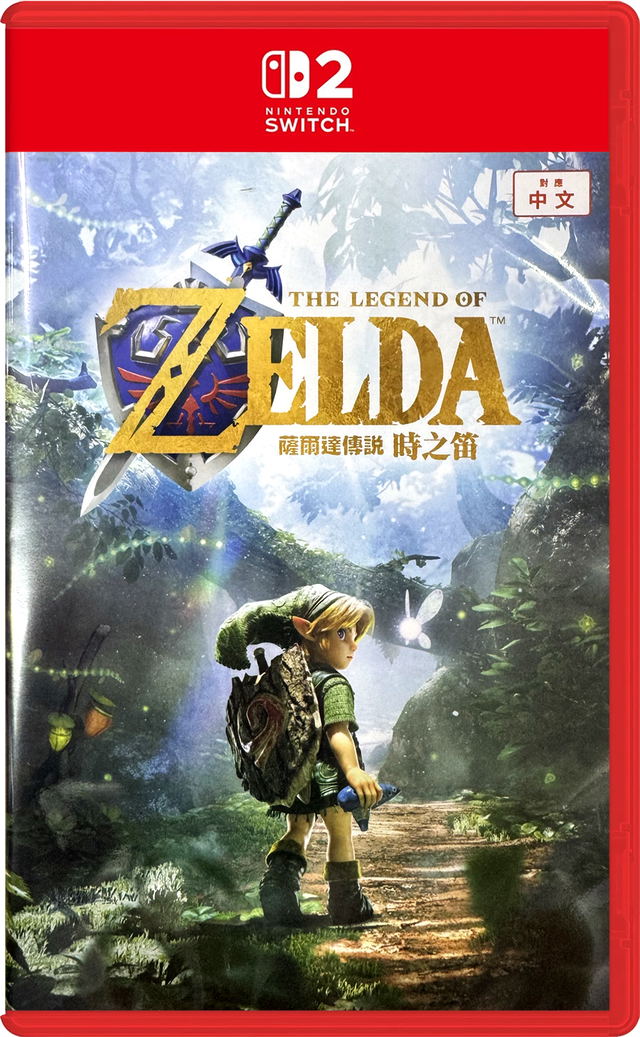
Affiliate links: ROCKSTARmedia may earn a commission on Play-Asia purchases at no extra cost to you. MYR prices were captured at publication and may change; shipping and SST are not included.
Related coverage
Network · latest from the sister sites
From the network
Track Malaysian Import Prices Live
Importing Japanese or Asian physical games to Malaysia? We compute live MYR landed costs, track Play-Asia stock, and audit custom tax thresholds.