Why Ocarina of Time Water Temple Is Better Than You Think

Entity Definition & Lead Dispatch
Nintendo is preparing the return of The Legend of Zelda: Ocarina of Time with an upcoming dedicated release for the Nintendo Switch 2 console, alongside a dedicated Zelda 40th Anniversary Special Edition Switch 2 hardware bundle slated for October 2026. Developed and published by Nintendo, this updated version addresses long-standing legacy design constraints from the 1998 Nintendo 64 original and the 2011 Nintendo 3DS remaster, particularly streamlining inventory management within the infamous Water Temple. For Southeast Asian and Malaysian gamers navigating regional physical allocations, the title represents a critical release on next-generation Nintendo hardware, carrying verified quality-of-life improvements such as dedicated boot-toggling hotkeys and updated camera controls directly into the modern hardware ecosystem.
Key Facts
| Attribute | Value |
| Platform | Nintendo Switch 2, Nintendo Switch Online + Expansion Pack, Nintendo 64 (Original) |
| Original Release Dates | 26 February 2007 (Wii VC, 1,000 Points), 2 July 2015 (Wii U VC, $9.99 / ~RM45) |
| Target Console Window | October 2026 (Zelda 40th Anniversary Special Edition Hardware Integration) |
| Developer / Publisher | Nintendo |
| Physical Edition Status | Physical Cartridge Confirmed; Regional "Replica N64 Box" Variant Revealed |
| Estimated Import Pricing | Standard Switch Software: ~$69.99 (~RM315 import conversion) / Japanese SKU: ~¥8,800 (~RM265) |
| Language Support | English text and audio supported across Western and Asian multi-language distributions |
| Hardware Compatibility | Nintendo Switch 2 (Native execution, modernized camera controls) |
How Do Modern Quality-of-Life Revisions Redefine the Water Temple?
The Nintendo Switch 2 version of The Legend of Zelda: Ocarina of Time retains the navigational structural layout of Lake Hylia's Water Temple while eliminating the mechanical friction of the Nintendo 64 original. By integrating on-the-fly Iron Boots equipment hotkeys and enhanced spatial visual indicators first refined in the 3DS iteration, the central three-tier vertical puzzle box operates as a cohesive, linear spatial puzzle rather than an inventory-halting slog.
In the original 1998 cartridge release, dynamic navigation required repeated manual pauses to access the subscreen equipment menu simply to sink or surface. Series producer Eiji Aonuma previously acknowledged this design oversight during post-mortems of the original level layout.
Eiji Aonuma, Series Producer, Nintendo I must apologize about the Water Temple; the boots were too cumbersome to switch back and forth.
Mechanical signposting remains intact across the Switch 2 presentation, including the floating block corridor revealed by shifting the central water level and the elevated Hookshot targets that govern progression toward the Longshot upgrade. The Switch 2 version carries over the 3DS edition's real-time boot-swapping mechanics to completely eliminate pause-menu friction in the Water Temple.
What Combat and Camera Enhancements Modernise the Morpha and Dark Link Encounters?
Modernized free-camera manipulation and optimized lock-on tracking update The Legend of Zelda: Ocarina of Time's signature mid-dungeon encounters for modern analog hardware. The illusionary chamber housing Dark Link benefits directly from higher temporal fidelity and wider focal depth, while the aquatic arena fight against Morpha mitigates restrictive wall-collision issues when isolating the nucleus with the Longshot.
The encounter with Dark Link centers on close-quarters spatial anticipation, mirroring Link's strike patterns across an uncanny, minimalist reflection pool. During the Morpha boss encounter, the arena's perimeter hazards and narrow four-pillar layout previously created restrictive recovery frames when utilizing the Hookshot and Longshot under legacy 4:3 camera constraints. Updated analog camera controls and responsive targeting stabilize player tracking during erratic movement phases in the Morpha aquatic boss arena.
Southeast Asia & Malaysian Collector Verdict
Malaysian and Southeast Asian physical collectors face distinct landed import costs for The Legend of Zelda: Ocarina of Time on Nintendo Switch 2, with Asian multi-language editions presenting the most cost-effective path over direct European or North American imports. Estimated retail landed costs for standard Western physical releases land between RM315 and RM345 ($69.99 baseline), whereas Asian/Japanese regional physical releases typically import at approximately ¥8,800 (~RM265) via Play-Asia and direct specialist importers.
With Nintendo confirming physical packaging initiatives—such as the regional retro "Replica N64 Box" packaging—physical cartridge preservation provides uncompromised on-cart playability without mandatory regional network downloads. Local retail distribution across West and East Malaysia via authorized channels remains preferable for warranty protection on dedicated hardware bundles, though Japanese multi-language game cards remain entirely functional due to the region-free architecture of the modern Nintendo hardware ecosystem. Regional Asian multi-language cartridges provide complete English language support on-cart without requiring secondary eShop downloads or regional account switching.
Common Questions
Does the Switch 2 release fix the Iron Boots pause-menu requirement?
Yes. The Switch 2 edition carries over the dedicated item-slot assignment established in the 3DS remaster, allowing players to equip and unequip the Iron Boots instantly with a single button press without pausing.
Is the Water Temple structurally different from the N64 original?
No. The room layouts, water-level control points, locked door locations, and spatial puzzles remain identical to the original design, preserving the architectural integrity of the Lake Hylia dungeon while enhancing visual routing cues.
Can Malaysian gamers play imported Japanese physical copies in English?
Yes. Japanese and Asian region physical game cards include full English text support directly on the cartridge, launching automatically in English when inserted into a console set to the English language.
Sources and Methodology
Source data compiled from Nintendo Life technical reporting, Nintendo direct hardware broadcasts, and production retrospectives covering The Legend of Zelda: Ocarina of Time. Regional pricing calculations reflect spot conversion rates recorded in October 2026, pegging standard $69.99 USD and ¥8,800 JPY software allocations to approximate Malaysian Ringgit (RM) import equivalents.
Where to buy · Play-Asia
Prices in MYR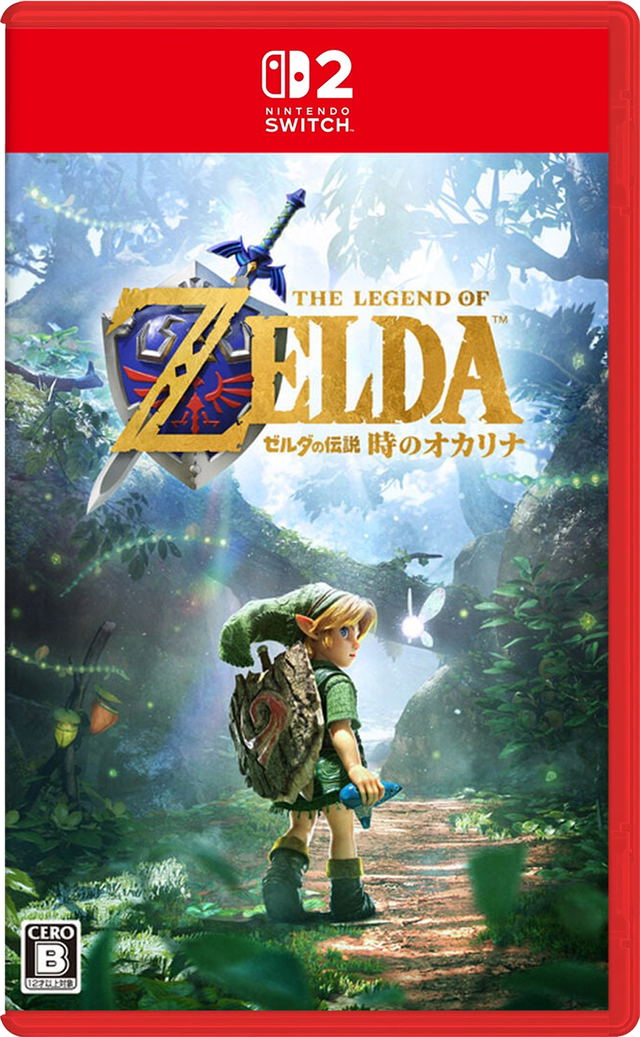
Affiliate links: ROCKSTARmedia may earn a commission on Play-Asia purchases at no extra cost to you. MYR prices were captured at publication and may change; shipping and SST are not included.
Related coverage
Network · latest from the sister sites
From the network
Track Malaysian Import Prices Live
Importing Japanese or Asian physical games to Malaysia? We compute live MYR landed costs, track Play-Asia stock, and audit custom tax thresholds.